THC Edibles Dose Calculator: Make Every Batch Consistent
@shanejzqk751
October 1, 2026 · 15 min read
If you have ever taken a bite from an edible and thought, “this is either much stronger or much weaker than I expected,” you already understand why a THC edibles dose calculator matters. Edibles are simple in concept, but finicky in practice. THC has to get from raw flower or distillate into fat, the fat has to spread evenly through your recipe, and then you have to divide the final mass into portions that are close enough for real life.
A calculator helps you do two things at once: estimate how much THC ends up in your finished edible, and translate that into a dose per piece. But a real dose calculator is also about making peace with variability. Even the best math will not override bad mixing, wrong units, or an extraction that did not happen.
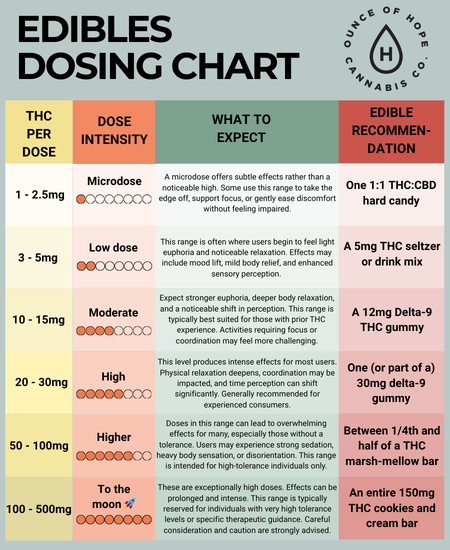
Let’s get practical, and build a workflow you can use on every batch.
Why “THC per serving” is where consistency breaks down
People talk about “THC mg” like it is a single number that reliably maps to how you feel. The truth is that the number you want is rarely the number printed on a package.
For example, flower labels often list THC as a percentage of the plant material, but edibles care about what actually makes it into your cooking fat. Distillates and concentrates make that easier, but they can still vary in potency, and measuring small amounts introduces error. On top of that, recipes change the final concentration. If you swap butter for oil, add a lot more coconut milk, or reduce the sauce, the dose math changes.
A THC in edibles calculator is a solid starting point, but it is only as good as the assumptions you feed it. When those assumptions match your process, the calculator stops being a fantasy and becomes a practical tool.
The core concept: convert input THC into edible mg
Most THC edibles calculator workflows boil down to a few conversions.
You start with an input material that has an estimated THC amount:
- Flower: percent THC by dry weight (and you multiply by the grams you use)
- Concentrate: labeled THC percent, or labeled mg per package, or a known potency for distillate
- Distillate/RSO: often labeled as “% THC” or “mg THC per gram” which is easier to handle
Then you convert that THC total into a milligram amount, and finally you divide by servings.
A basic THC edibles dose calculator is usually built on this mental equation:
Total THC in batch (mg) ÷ number of servings = mg THC per serving
The two tricky parts are (1) getting a realistic “total THC in batch” and (2) choosing servings that match how you actually portion.
Decarb and “THC” names matter more than people expect
When you buy flower, the label commonly gives THC percentage, but much of that THC may be in an acidic form (THCA). Heating during decarboxylation converts THCA into THC. The conversion is not 1-to-1 by mass.
A workable approach is to decarb first, then treat the input as if it becomes THC. If you skip decarb, your edibles can come out disappointingly weak, and the math will not save you.
Even if you are comfortable decarbing, the next edge case is batch loss. Extraction is not perfect. Some THC stays behind on plant material, some is left in the strainer, and some stays in the bowl. That means you need to estimate efficiency, or at least keep it consistent from batch to batch.
A quick dosing model you can actually use
Before we go heavy on scenarios, here is a simple, repeatable dosing model.
You will set three numbers:
- Input material amount (grams, or mL for distillate if you know mg per mL)
- THC potency of that input (percent THC or mg per gram)
- Your batch efficiency factor (a realistic range that you stick with)
Then compute:
- THC in input (mg)
- THC extracted into edible fat (mg) = THC in input × efficiency factor
- mg per serving = THC extracted ÷ servings
That efficiency factor is the part people hate because it feels like “guessing.” In practice, it is more like acknowledging reality. If you always use the same decarb time, the same ratio of fat to plant, the same straining method, and the same simmer temperature, your extraction efficiency will cluster around a similar range.
If you want an easy THC calculator edibles approach, keep it consistent first, then refine later with feedback.
A practical efficiency range (use ranges, not wishful thinking)
Exact extraction efficiency depends on process, but you can think in bands. Many home cooks end up using an efficiency factor that falls somewhere around the middle of a plausible range rather than assuming 100%.
As a working mental model:
- If you have not been careful with decarb or extraction, efficiency can be lower.
- If you use a thorough decarb, a strong fat-to-plant ratio, low simmer time, and strain carefully, efficiency can be higher.
Rather than pretending you can “know” your efficiency from a single recipe, you can treat it as a knob you adjust after a couple batches. Your THC in edibles calculator should accept a range, not a false certainty.
Example 1: Flower-based edibles with a THC edibles dose calculator
Let’s say you have:
- 10 grams of flower
- flower is labeled at 20% THC
- you decarb and extract into butter
- you make 20 servings
First compute THC in the flower:
10 g × 20% = 2 g THC total by weight in the plant
Now convert grams to milligrams:
2 g = 2000 mg THC
Next, apply extraction efficiency. If you assume (for example) 70% of THC transfers into your fat, then:
2000 mg × 0.70 = 1400 mg THC in your edible mixture
Finally, per serving:
1400 mg ÷ 20 servings = 70 mg THC per serving
Now the key point: if your real results are consistently stronger or weaker than that, adjust efficiency for your next batch. That is how a calculator becomes trustworthy for your kitchen.
Here’s the trade-off. If you set efficiency too low, you will systematically under-dose. If you set it too high, you will get batches that feel “hot.” Either outcome is avoidable by using ranges and then tightening after experience.
A small batch is where errors show up fastest
If you only make a couple servings, one measuring mistake can shift potency dramatically. For consistency, many people do better with larger batches because minor losses become a smaller percentage of the total. That does not mean you need huge batches, it means your measurement precision matters more when the batch is small.
Example 2: Distillate or infused oil with known THC
Now let’s switch to a scenario that matches many people’s reality: using distillate, RSO, or an infused oil where you have potency data.
Suppose you have distillate at 900 mg THC per 1 mL (a concentration you got from a label or a lab report).
You add:
- 2 mL distillate into your recipe
- total THC = 2 mL × 900 mg per mL = 1800 mg THC
Then you portion into 30 servings:
1800 mg ÷ 30 = 60 mg per serving
This is why many cooks prefer distillate-based edibles for dosing consistency. A THC calculator edibles workflow becomes less speculative because you are starting from a more direct potency measure.
The remaining variable is mixing. Distillate can clump if your base is not at the right temperature, or it can separate if you cool too quickly. Your dose calculator can be perfect on paper and still be wrong if the mix is not uniform.
Example 3: The “why does my calculator not match?” problem
A lot of confusion comes from mixing up these two totals:
- THC in the raw ingredient (what the label gives)
- THC in the final product (what you actually ingest)
If you use a THC edibles dose calculator but ignore decarb or assume 100% extraction, you can easily overshoot. On the other hand, if you are conservative with efficiency and your process is thorough, you might undershoot.
This mismatch is not a failure of math, it is a mismatch of assumptions.
A good THC in edibles calculator does not just output a number. It should force you to decide what is realistic for your inputs. Once you make those decisions once, the calculator becomes a repeatable framework.
How to portion so the calculator matches reality
Even with perfect THC math, portioning is where consistency is lost for many kitchens.
If you make brownies, swirling, cutting, and uneven pan coverage can create gradients. If you make gummies, the molds can be inconsistent if the mixture thickens mid-pour. If you make capsules, dosing depends on fill mass and uniform mixing.
The goal is not “exact equality,” it is “close enough that users have predictable experiences.”
Here are a few practices that matter more than people expect:
- Mix thoroughly right before portioning, not an hour earlier.
- Avoid cooling the mixture enough to form layers or viscosity gradients.
- Measure servings by weight when possible. If you can weigh portions, do it. If you cannot, use a consistent scoop size and repeat carefully.
A simple portioning rule
If you can, portion by mass. If you cannot, portion by volume, but keep the base consistent in temperature and thickness.
That is the difference between a batch that feels stable and a batch that feels like a lottery.
The “calculator steps” that keep you from making expensive mistakes
You do not need a complicated system, you need a consistent system.
When people search for THC edibles calculator tools, they often want a single box where they paste numbers. That is fine. What matters is the workflow behind it.
Here is a straightforward process that works whether you use a spreadsheet, a web calculator, or a hand calculation:
- Convert your input THC to total mg (using percent or mg per gram data)
- Decide on an efficiency factor you can defend based on your process
- Multiply to estimate mg THC in the finished batch
- Divide by the number of servings you will actually eat
- After one or two batches, adjust your efficiency assumption based on real outcomes
That adjustment piece is crucial. It turns your THC edibles dose calculator from “theory” into “your process.”
The two most common edge cases that ruin edible dosing math
Edge cases are where the math becomes a trap. Here are the ones that come up most often in real kitchens.
- You used a recipe that changes fat proportion after infusion. If your infusion method assumes a certain fat amount but your final recipe dilutes it, the concentration drops.
- You are mixing dry ingredients after you melted and infused. If you do not combine thoroughly, you can get a portion gradient where some pieces taste stronger.
- You forgot decarb for flower-based inputs or decarbed inconsistently. Longer or hotter decarb can degrade THC, while under-decarbing leaves more THCA behind.
- Your servings are not evenly sized. Cutting a sheet pan by eye is common, but it is not consistent enough if you are aiming for predictable doses.
If you are using an edibles thc calculator, pause before you trust the output. The calculator is doing the conversion you asked for, but the biggest error is often what you typed or how the batch was assembled.
Building a “repeatable batch” mindset
The best THC edibles calculator does not just spit out a number. It gives you a target number, and your job is to build a batch that hits it.
That means your repeatability matters more than perfect precision.
If you have a reliable decarb method, keep it. If you use a consistent ratio of infused fat to final recipe base, keep it. If you stir for a fixed time and keep the mix in a predictable temperature window, keep that too.
People in dosing communities often develop a practical standard for batch consistency, sometimes referred to in friendly terms like “Ounce of Hope” style kitchen practice. Even if the name changes, the concept stays the same: consistency comes from process discipline, not from magical math.
A mini “dose planning” guide for different goals
Not everyone is making edibles for the same purpose. The target dose changes depending on whether you are aiming for mild comfort, daytime functioning, sleep support, or stronger effects.
What changes with dose planning is how you choose your serving size, not just what number you want from the THC in edibles calculator.
For example, if you want lower doses, you increase the number of servings. If you want stronger doses, you reduce servings. But once you start pushing very small serving sizes, portioning errors become more impactful.
A calculator helps you find the point where your serving size is practical to portion and still hits your desired mg range.
When labels give percent THC but you need mg
A lot of THC edibles calculator confusion comes from mixing formats. Labels might say “20% THC,” but your recipe conversion wants mg. The conversion is straightforward if you keep it consistent:
- Percent THC means grams THC per 100 grams of material
- Multiply grams of material by percent, then convert grams to milligrams
If you are working with concentrates, labels might give mg per gram, or they might give a percentage with total grams in the package. Either way, you can convert to total mg THC for your batch.
If the label is vague, do not force certainty. Use a range, or stick to the labeled percentage and accept that real-world potency can shift.
How to validate your calculator without turning batches into experiments
You can learn quickly, but you do not need to waste a whole batch to figure out dose accuracy.
Validation works best when you:
- Keep your batch process consistent.
- Keep your serving size consistent.
- Record what you ate and when, plus the subjective onset and effect duration.
From those notes, you can adjust your efficiency factor and portioning approach. Over a few rounds, your THC edibles dose calculator becomes less about guessing and more about tracking.
This is also where you consider tolerance. If someone’s first edible experience is very different than their second, you cannot judge the calculator based on tolerance alone.
Temperature, mixing, and timing: the unglamorous variables
One reason people distrust calculations is that edible potency can shift with technique, not just ingredient math.
If you heat too hot for too long, some cannabinoids degrade. If you do not mix thoroughly, THC concentrates into certain pockets. If you cool too quickly, the fat can thicken or separate, trapping THC away edibles thc calculator from parts of the final mixture.
You do not need lab-level control. You need repeatable steps:
- infuse on a consistent heat level
- avoid scorching
- strain the same way
- cool and mix with the same timing each batch
If you do that, your THC edibles calculator output and your lived experience align more often than not.
A compact “formula” you can keep on a sticky note
If you want the THC edibles calculator logic in a single line, use this structure:
mg THC per serving = (input grams × input THC percent × 10,000) × efficiency ÷ servings
That “10,000” factor is just a unit conversion helper: percent to fraction and grams to milligrams. If your input is already in mg or mg per mL, you skip the percent math and use direct mg.
Even if you never write the formula down, thinking in these steps helps you catch when something feels off, like a decimal error or a wrong efficiency assumption.
Two quick checks before you commit to a serving count
These checks are fast, and they catch the most expensive mistakes.
- Does the mg per serving land in a reasonable range for your target? If your calculator says 300 mg per serving but your servings are small and your process is typical, you might have a units mismatch.
- Did you use the right input amount? People accidentally type “1 gram” when they meant “10 grams,” or they use the package total THC as if it were per gram.
- Did you adjust for dilution? If your infusion fat is part of a larger recipe, your concentration drops.
- Did you pick a serving count that matches how you portion? 12 servings from a pan cut into uneven pieces is not the same as 24 consistent micro-portions.
Where spreadsheets and calculators shine (and where they cannot)
A THC calculator edibles tool is excellent for converting potency data into serving doses. It helps you plan, compare, and scale.
But it cannot correct for:
- uneven mixing
- inconsistent decarb or extraction
- clumping during infusion
- portioning errors
- tolerance differences among users
So treat the calculator as a planning instrument and your batch process as the execution layer. When both layers agree, the dose becomes predictable, and the whole experience improves.
Putting it all together: making every batch consistent
Consistency is not one magic calculation. It is a feedback loop between math and process.
Use a THC edibles dose calculator to estimate dose per serving https://www.ounceofhope.com/how-much-of-an-edible-should-you-take-thc-calculator/ from your ingredients. Decide on an efficiency factor that reflects your real extraction behavior, then adjust it after you learn from the next batch. Portion in a way that preserves uniformity, ideally by weight, and keep mixing and temperatures consistent.
When you do this, the calculator stops being a one-time tool and becomes your kitchen standard. You stop chasing surprises, and you start building edibles you can dose with confidence, even when you are scaling recipes up, down, or across different ingredient formats.
If you want a shorthand: calculate first, then execute with process discipline, then refine based on what your batches actually do. That is the difference between “edibles that might hit” and edibles that consistently meet your expectations.